

Chrome vs. Vegetable Tanning: Environmental Realities Every Leather Buyer Should Know
When you buy a leather jacket, you're not just buying the hide. You're buying the process that turned raw animal skin into a wearable material — and that process has a bigger environmental footprint than most brands want to talk about.
The word leather on a label tells you almost nothing. It doesn't tell you whether the hide was treated with toxic chemicals or natural plant extracts. It doesn't tell you whether the wastewater was safely managed or dumped into a river. And it certainly doesn't tell you how long that jacket will last before it ends up in a landfill.
Two processes dominate the leather industry: chrome tanning and vegetable tanning. They produce very different materials, with very different environmental profiles. This blog breaks both of them down honestly — the good, the bad, and the parts the industry tends to gloss over. By the end, you'll know exactly what to look for when you're investing in a leather jacket that you can feel good about wearing for years.
First — What Is Tanning, and Why Does It Matter?
Before we compare the two methods, let's cover the basics. Raw animal hide, if left untreated, would simply rot. Tanning is the process that converts that raw skin into stable, durable leather by chemically bonding with the collagen fibres inside the hide — stopping the decomposition process and locking in the material's structure.
The method used to do that bonding changes everything: how soft the leather feels, how it ages, how water-resistant it is, how long it lasts, and — critically — what happens to the water, chemicals, and waste that the process generates.
Tanning has been practised for over 6,000 years. For nearly all of that history, it was done using plant-based materials. Then in 1858, a faster, cheaper method using chromium salts was introduced — and it changed the industry forever. Today, around 90% of all leather produced globally is chrome-tanned. That's the reality of the material most people are wearing right now.
Left: Chrome tanning — fast, chemical-driven, dominant worldwide. Right: Vegetable tanning — slow, plant-based, a small fraction of global production.
Chrome Tanning: The Fast Lane, and Its Environmental Cost
Chrome tanning was invented in 1858 and became the standard for a very simple reason — speed. Where vegetable tanning takes weeks or months, chrome tanning can produce finished leather in as little as one to two days. That speed makes it dramatically cheaper to produce at scale, which is why the vast majority of leather jackets, bags, shoes, and car seats in the world are chrome-tanned.
The process uses chromium sulphate — a trivalent chromium salt — to penetrate and bond with the hide's collagen fibres. The result is soft, supple, water-resistant leather that takes colour readily and is ready to work with almost immediately. For manufacturers, it's a dream material. For the environment, the story is more complicated.
The environmental concern: chromium in water
The biggest issue with chrome tanning is what happens to the wastewater it generates. The tanning bath contains not just chromium, but often arsenic, lead, and formaldehyde as well. In countries with strong environmental regulations — the EU, USA, and parts of Australasia — tanneries are required to treat and recover chromium from wastewater before it's released. Modern closed-loop systems in these regions have significantly reduced the damage.
But approximately 90% of global leather production happens in countries with weaker or poorly enforced regulations — Bangladesh, India, China, and parts of Southeast Asia. In these regions, chromium-laden wastewater has been documented contaminating rivers, groundwater, and agricultural soil. The primary concern is that trivalent chromium (Cr-III, the form used in tanning) can, under certain conditions, oxidise into hexavalent chromium (Cr-VI) — a known carcinogen linked to respiratory disease, skin damage, and increased cancer risk among tannery workers.
The environmental impact of chrome tanning varies enormously depending on where the leather is made. Chrome-tanned leather from a certified European or American tannery is vastly different — environmentally — from the same process in an unregulated facility. Where your leather comes from matters as much as how it's tanned.
Vegetable Tanning: The Natural Route — and Its Own Honest Trade-offs
Vegetable tanning is the older method — used for thousands of years before chrome tanning existed. Instead of chromium salts, it uses tannins — naturally occurring plant compounds found in tree bark (oak, chestnut, mimosa), leaves, and roots. These tannins slowly bond with the hide's collagen, producing leather with a firmer, denser character.
The process is slow — weeks to months for standard leather, and potentially over a year for the finest grades. It's labour-intensive, requires genuine craft knowledge, and produces leather that many enthusiasts consider superior in longevity and character. Vegetable-tanned leather develops a rich patina with age, firms up beautifully with use, and — when it eventually does break down — does so without releasing the toxic residues associated with chrome tanning.
But vegetable tanning isn't without environmental cost
Here's the part that tends to get glossed over in marketing: vegetable tanning is significantly more water-intensive than chrome tanning. The slow immersion process requires large volumes of water and considerable quantities of tannin agents. The resulting wastewater, while not containing chromium, still contains high concentrations of organic matter that must be treated before release — and in smaller or less well-resourced tanneries, that treatment doesn't always happen properly.
Additionally, the claim that vegetable-tanned leather is fully biodegradable is a simplification. The entire point of tanning is to resist decomposition — a well-tanned hide, vegetable or otherwise, will not readily break down in landfill conditions. It degrades faster than chrome-tanned leather, but it is not a zero-impact end-of-life solution.
Neither method is without environmental cost — but they carry very different risks at different stages of production and end of life.
At a Glance: How They Stack Up
Here's a side-by-side score across the metrics that matter most for both the environment and the leather itself:
Chrome Tanning
Vegetable Tanning
The Full Comparison Table
| Factor | Chrome Tanning | Vegetable Tanning |
|---|---|---|
| Tanning agent | Chromium sulphate (chemical) | Plant tannins — oak, chestnut, mimosa |
| Processing time | 1–2 days | Several weeks to months |
| Global share | ~90% of all leather produced | ~10% of global production |
| Chemical waste | Toxic — chromium, heavy metals | Organic — requires treatment but non-toxic |
| Water usage | Moderate — fast process uses less | High — slow immersion is water-intensive |
| Worker health risk | High where unregulated — Cr-VI carcinogen risk | Lower — no toxic chemical exposure |
| Leather softness | Very soft from day one | Firm initially, softens beautifully over time |
| Water resistance | High — resists moisture readily | Moderate — needs conditioning and sealing |
| Patina development | Limited — colour stays consistent | Excellent — deepens richly with age |
| End-of-life | Slow to break down, toxic residues | Degrades faster, no toxic residues |
| Cost to produce | Lower — fast process, easy to scale | Higher — labour-intensive craft process |
| Best known for | Jackets, car seats, bags, shoes | Premium goods, saddlery, belts, luxury items |
The Honest Truth: Neither Method Is Perfect
Here's something the leather industry doesn't love to acknowledge: some research suggests there are no dramatically significant differences in the overall environmental footprint between the two methods when all factors — water use, energy, land, chemical treatment — are weighed together. Vegetable tanning isn't a silver bullet. Chrome tanning from a well-regulated tannery isn't automatically a disaster.
What does make a consistent difference is where the leather is made and under what standards. A chrome-tanned hide from a Leather Working Group (LWG) Gold-rated tannery in Italy or the USA, with closed-loop chromium recovery and full wastewater treatment, is a very different product environmentally from chrome-tanned leather produced in an unregulated facility halfway around the world.
The same applies to vegetable tanning — a small artisan tannery using traditional methods carefully is not the same as a large facility cutting corners on water treatment to keep costs down.
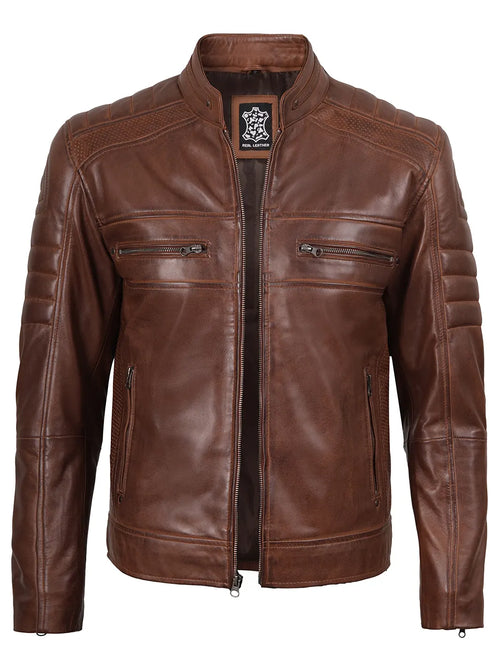
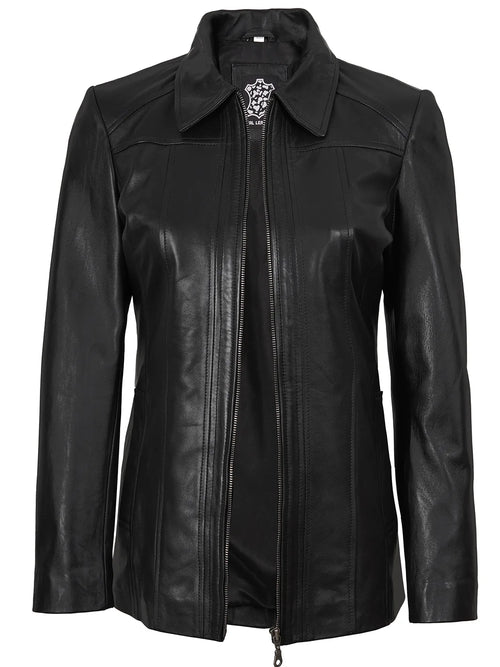
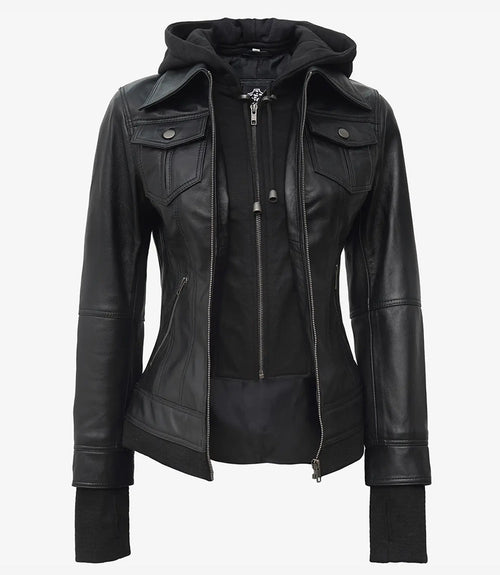
Every Decrum jacket is crafted from full-grain lambskin leather, drum-dyed at 0.6–0.8mm thickness. We source from tanneries that meet responsible production standards, because we believe the leather that goes into a jacket that lasts 20 years is fundamentally more sustainable than cheap leather that ends up in landfill after two. Longevity is its own form of environmental responsibility.
What to Actually Look For When Buying
You probably can't tell just by looking at a jacket whether it's chrome or vegetable-tanned, or where and how responsibly it was produced. But here are the questions worth asking — and the signals worth looking for:
1. Ask where the leather comes from
Brands that source responsibly are usually proud to say so. Look for mentions of European tanneries, specific countries of origin, or certifications like the Leather Working Group (LWG) standard, which rates tanneries on environmental performance, traceability, and chemical management.
2. Choose quality over price
The single most sustainable leather purchase is the one you don't have to replace. A well-made real leather jacket from a quality hide, cared for properly, can last decades. Cheap leather — regardless of tanning method — ends up as waste far sooner. Buying a jacket built to last is one of the most straightforward environmental decisions you can make.
3. Look for transparency
Brands that can't or won't tell you where their leather comes from, how it was tanned, or what standards their tanneries meet are usually hiding something. Transparency isn't hard when you have nothing to hide. It's worth supporting brands — like Decrum — that are open about their materials and sourcing.
4. Care for what you have
Proper leather care — conditioning, correct storage, avoiding unnecessary heat and moisture — dramatically extends the life of any leather jacket, chrome or vegetable-tanned. The environmental math of a jacket you keep for 25 years versus one that deteriorates in 3 is not close. Check out our care and sizing guide for tips on keeping your jacket at its best.
Built to Last a Lifetime
Real Leather Jackets — Quality That Outlasts Trends

Frequently Asked Questions
Frequently Asked Questions
What is the difference between chrome and vegetable tanning?
Chrome tanning uses chromium salts to produce soft, supple, water-resistant leather in about a day. Vegetable tanning uses natural plant tannins over weeks to create firmer leather that develops a rich patina. Chrome is faster and cheaper; veg-tan is more traditional.
How is leather made?
Leather is made by cleaning a raw animal hide, removing hair and flesh, then tanning it with either chromium salts or plant tannins to stop it decaying. The hide is then dyed, dried, and finished into usable leather.
Which is better, chrome or vegetable-tanned leather?
Neither is strictly better; it depends on use. Chrome-tanned leather is softer, more flexible and water-resistant, ideal for jackets. Vegetable-tanned leather is firmer, ages into a patina, and is more environmentally traditional, ideal for belts and bags.
Is chrome-tanned leather safe?
Yes. Finished chrome-tanned leather is safe to wear; it uses trivalent chromium, not the toxic hexavalent form. Reputable tanneries control the process so the final leather meets safety standards for everyday garments.


