

Decoding Suede, Nubuck, and Roughout: What These Textures Really Are and How They Differ
They all look fuzzy. They all feel soft. But suede, nubuck, and roughout come from completely different parts of the hide, are made in completely different ways, and behave very differently over time. Lets look at what the numbers actually say - and what they mean for a jacket you wear every day.
Walk into any leather goods store and you will encounter all three of these textures - sometimes on the same shelf, sometimes mislabelled, sometimes used interchangeably by the sales staff. The confusion is understandable. To the untrained eye, a suede jacket and a nubuck boot can look almost identical. But the difference between them is not cosmetic. It is structural - rooted in which layer of the animal hide each material comes from and what was done to it during production.
Understanding that difference matters because it directly affects how your jacket, bag, or shoes will look, perform, age, and respond to care. This blog decodes all three textures clearly, starting from the same place all good leather education starts: the hide itself.
Start Here: The Three Layers of an Animal Hide
Every animal hide has a layered structure. To understand suede, nubuck, and roughout, you need to understand three key zones within that structure:
The grain layer — the outermost surface of the hide, directly beneath the animal hair. This is the densest, toughest part of the skin, with tightly packed collagen fibres that give it its strength and natural water resistance. Full-grain leather, top-grain leather, and nubuck all come from this layer.
The junction — the transitional zone between the grain and the deeper flesh. The fibre density changes here, becoming less compact and more flexible.
The corium — the deep inner layer, sometimes called the flesh side. The collagen fibres here are much looser and less dense than the grain. This layer is softer and more pliable, but also weaker and more porous. Suede comes from this layer.
All three textures — suede, nubuck, and roughout — expose fibrous surfaces rather than the smooth sealed grain. But the fibre they expose, and where it comes from in the hide, is completely different for each one.
The three textures come from different parts of the same hide. Nubuck is sanded from the outside of the grain layer. Roughout is the full-grain hide flipped to expose the flesh side. Suede is the corium – the inner layer split away from the grain entirely.
Suede, Nubuck, and Roughout — Decoded One by One
Suede
The inner split layer
Where it comes from: The corium — soft inner flesh side of the hide, split away from the grain layer entirely.
How it is made: The hide is split through a machine. The flesh side is then sanded for a uniform, fine nap.
Feel: The softest of the three — fluffy, fine nap, almost cloud-like against the hand.
Durability: The weakest — no grain layer means less structural integrity. More prone to staining.
Nubuck
The outer grain, sanded down
Where it comes from: The grain layer — same outer surface used for full-grain leather, but with the top surface sanded away.
How it is made: Full-grain hide is abraded on the outside to create a short, dense velvet-like nap.
Feel: Firm, velvety — denser and less fluffy than suede. A tighter nap with slight colour variation.
Durability: The most durable of the three — the grain fibres beneath are still intact and dense.
Roughout
Full-grain, flipped inside out
Where it comes from: Full-grain leather — but worn with the flesh side facing outward instead of smooth grain.
How it is made: The full-grain hide is reversed. The flesh side is exposed — sometimes lightly sanded, sometimes left raw.
Feel: Rougher than suede — more textured, coarser nap, especially if left unsanded.
Durability: Excellent — it is still a full-grain hide, just flipped. Dense fibres give strong structural performance.
Side by Side — the Full Comparison
| Property | Suede | Nubuck | Roughout |
|---|---|---|---|
| Layer of origin | Corium inner flesh | Grain outer layer | Full-grain flipped |
| Production method | Split + sanded flesh | Grain sanded from outside | Hide reversed, flesh out |
| Nap texture | Fine, fluffy, soft | Short, dense, velvety | Coarser, rougher |
| Durability | Lower — no grain intact | High — grain fibres intact | High — full-grain build |
| Water resistance | Poor — very porous | Moderate — denser | Moderate — wax helps |
| Stain resistance | Low — absorbs readily | Better — tight surface | Moderate — traps dirt |
| Typical Price | Mid range | Mid to high | Mid range |
| Care Level | High — needs brushing | Medium — brush + protect | Low — very forgiving |
How to Care for Each Texture — They are Not the Same
Treating them like smooth leather is the biggest mistake. Here is what they need:
Suede care
A stiff suede brush is your most important tool. Brushing in one direction keeps the nap clean. Water is suede greatest enemy: it causes fibres to flatten. A waterproofing spray before first use is non-negotiable. Never use leather conditioner on suede.
Nubuck care
Similar to suede, but the shorter nap is more forgiving. A soft nubuck brush keeps it clean. It still needs a protective waterproof spray. Light application of nubuck-specific conditioner can restore flexibility.
Roughout care
The most low-maintenance. A stiff brush removes surface dirt. Wax treatments bond with open fibres and create a water-resistant barrier. Unlike suede, wax does not ruin the surface; it changes it into a waxed finish.
The nap length and density under magnification tells the story: suede long loose fibres from the split flesh layer, nubuck short dense fibres from the sanded grain, and roughout irregular coarser fibres from the unsanded flesh side of a full-grain hide.
Where Decrum and These Textures Meet
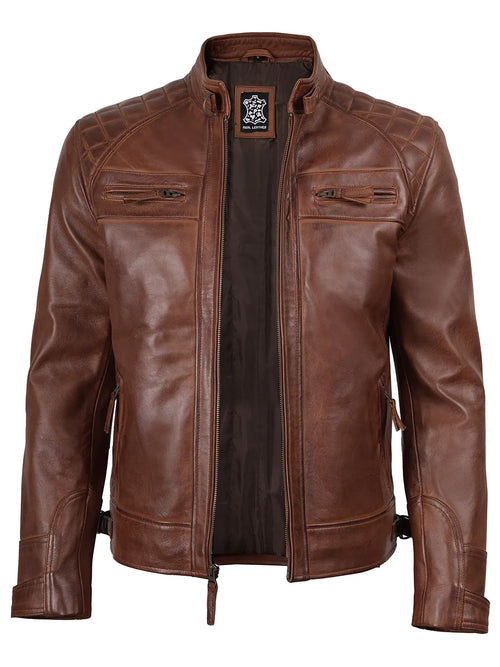
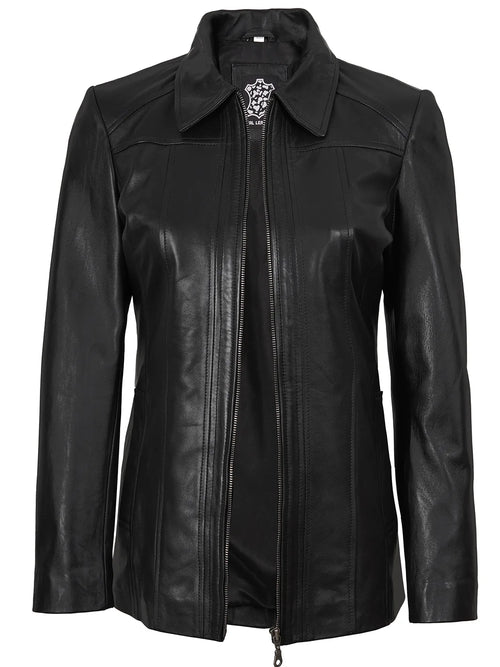
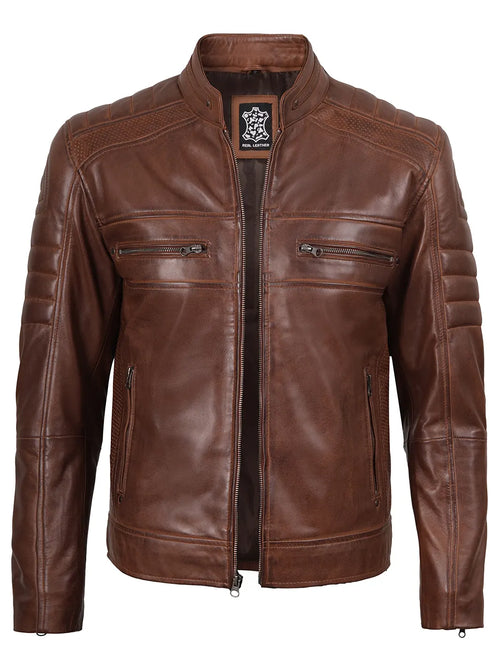
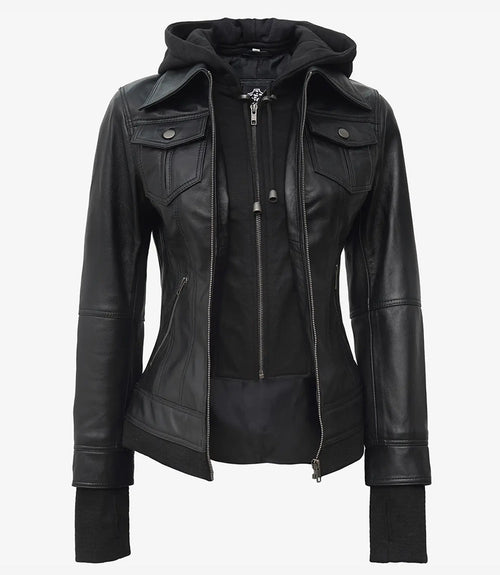
Decrums core jacket range is built on full-grain smooth lambskin – the surface that develops patina, breathes naturally, and improves with wear. Understanding nubuck is grain-side sanded means you understand why it will not develop the same character as smooth full-grain. Understanding suede comes from the split corium explains its softness and fragility.
Full-Grain Lambskin — The Smooth Grain at Its Best
Frequently Asked Questions
Related guides: types of leather (grades & finishes) · suede vs leather · full-grain vs top-grain · lambskin vs cowhide


